Confetti, Pings, and One-Click Orders: How Your Broker App Nudges You Toward Overtrading — and How to Push Back
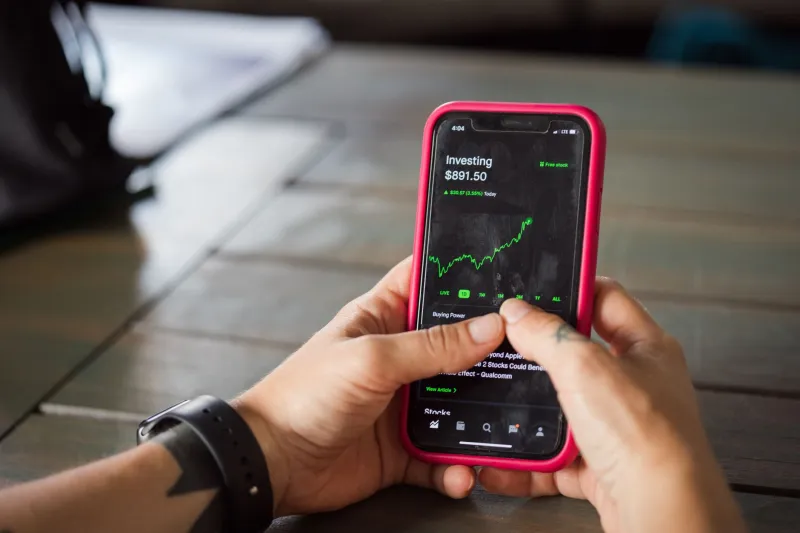
Open your brokerage app and look at it honestly. Not as an investing tool, but as a product. The celebratory animations when an order fills. The push notification announcing that a stock on your watchlist moved 3% before lunch. The buy button that completes a trade in under two seconds. None of this is accidental. Modern trading platforms are built by teams whose success is measured in daily active users, session length, and trades per customer — metrics that have nothing to do with whether your portfolio compounds.
The evidence on overtrading is not subtle. Academic studies going back decades, including the well-known work of Brad Barber and Terrance Odean on retail investor behavior, consistently find that the most active traders earn the worst net returns. In one frequently cited analysis, investors who traded most frequently lagged the market by roughly six percentage points annually. Every unnecessary trade pays a spread, often a fee, and frequently a tax bill — and the app never mentions any of it at the moment you tap the button.
The Persuasion Architecture Hiding in Plain Sight
Consider where the friction actually sits. Opening a new position takes one tap. Closing one takes one tap. Checking your portfolio takes zero — it greets you on launch. Meanwhile, useful but unexciting actions such as setting up an automatic monthly transfer or reviewing your cost basis are buried three menus deep. The path of least resistance points toward activity, and human behavior follows.
Several specific mechanisms deserve scrutiny:
- Push notifications convert idle moments into trading sessions by manufacturing urgency around ordinary price movement.
- Default settings — market orders preselected, fractional shares front and center — steer the majority of users toward whichever option appears first.
- Gamified feedback, from confetti bursts to streak counters, borrows directly from the playbook of mobile games and slot machines.
- Watchlist alerts and trending lists create a fear of missing out on whatever happens to be moving today, regardless of whether it belongs in a long-term plan.
None of these features is fraudulent. But their collective effect is a platform optimized for engagement rather than investor outcomes — and the difference shows up in your statements.
Running a Design Audit on Your Own App
You do not need a background in behavioral science to diagnose your platform. Set aside fifteen minutes and work through four questions.
First, count the interruptions. Open your phone's settings and check how many notifications your broker sent last week. Each one is a prompt to act. If the number exceeds a handful, you are being recruited into a trading habit you never consciously chose.
Second, time the trade. How many taps from app open to a filled market order? If the answer is three or fewer, your broker has removed every natural pause where deliberation might occur. Recognizing that speed as a design choice, not a convenience, changes how you use it.
Third, find the frictionless path and compare it to the deliberate one. How many taps to place a limit order versus a market order? How many to schedule an automatic investment versus to chase a trending ticker? The gap between those two paths tells you exactly which behavior the app prefers you to adopt.
Fourth, audit your own history. Pull up your trade log for the past year. Count the positions held fewer than thirty days. Then honestly assess: did that activity add return, or merely add cost? For most retail investors the honest answer is uncomfortable, which is precisely why the log is worth reading.
Rebuilding the App Around Your Plan, Not Theirs
The good news is that the same screens can be turned in your favor with a handful of deliberate changes.
Disable every notification except security alerts. Price movements of individual stocks are noise for anyone investing with a multi-year horizon. If a holding genuinely requires action on a Tuesday afternoon push alert, it was probably too speculative to own.
Make limit orders your default. Market orders guarantee execution but not price; in fast-moving names the spread can quietly cost a meaningful fraction of a percent on every trade. Setting a limit forces you to state a price you consider acceptable — a small pause with real economic value.
Delete the watchlist of momentum names. A list of twenty volatile tickers checked daily is a slot machine in spreadsheet form. Replace it with a short list of holdings tied to a written thesis, reviewed quarterly rather than hourly.
Automate the boring path. Route a fixed amount into a broad-market index fund on a set date each month, ideally inside a tax-advantaged account. Once the contribution is automatic, the app's most persuasive features lose their target: there is no decision left to hijack.
Introduce your own delay. Some investors adopt a simple twenty-four-hour rule for any trade not scheduled in advance. Write the order down, sleep on it, and place it the next morning if the reasoning still holds. A remarkable share of impulsive trades does not survive the night.
Engagement Is Not a Fiduciary Duty
To be clear, low-cost brokers have delivered genuine benefits to American investors: zero-commission trading, fractional shares, and access that was once reserved for the wealthy. The problem is not that these platforms exist. It is that their business models — whether payment for order flow, margin lending, or securities lending — often depend on activity, and the interface reflects that dependency in dozens of small, cumulative ways.
Your broker's app is a product designed by people with incentives that are not identical to yours. Treating it that way — auditing its nudges, muting its prompts, and leaning on automation instead of willpower — is one of the cheapest improvements available to any portfolio. The market will supply the returns. Your job is to stop paying an engagement tax to collect them.