The Case for Investing Like a Machine: How Automated Contributions Quietly Beat Three Decades of Market Timing
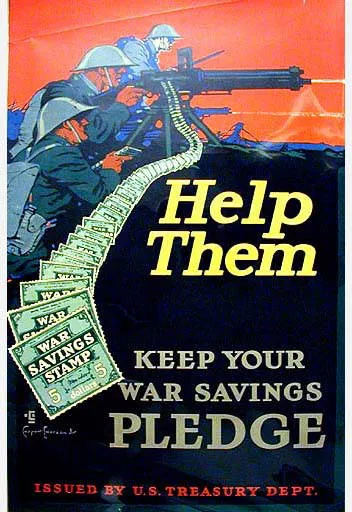
Photo: Casper Emerson, Public domain, via Wikimedia Commons
There is a peculiar irony at the heart of American investing: the strategies that feel the least sophisticated often produce the most respectable results. Wall Street employs armies of analysts armed with real-time data, macroeconomic models, and proprietary algorithms, yet one of the most reliable paths to long-term wealth remains a plain automatic transfer from a checking account into a diversified fund, executed every month regardless of headlines.
It sounds almost dismissive of human intelligence. It shouldn't. The evidence behind systematic, automated investing — commonly known as dollar-cost averaging — is difficult to argue with, and understanding why it works is essential for any retail investor building a durable portfolio.
What the Data Actually Shows
Consider the period from the early 1990s through today. An investor who contributed a fixed amount to an S&P 500 index fund on the first business day of every month would have bought shares during the dot-com collapse, the 2008 financial crisis, the 2020 pandemic shutdown, and the 2022 rate-hike drawdown. In each instance, those contributions purchased shares at depressed prices — shares that later appreciated substantially.
Studies that compare this approach against hypothetical perfect timing consistently find the same pattern. The oft-cited analysis from CXO Advisory, which graded thousands of public market calls by professionals and commentators, found an accuracy rate of roughly 47% — essentially a coin flip. Meanwhile, research from firms such as Charles Schwab has shown that lump-sum investing outperforms waiting for a dip, but that dollar-cost averaging outperforms the far more common behavior: waiting, hesitating, and entering after markets have already recovered.
The lesson is not that automation is a magic formula. It is that the greatest destroyer of retail returns is not picking the wrong fund — it is mistiming the decision of when to be invested at all. Missing even the ten best trading days of a multi-decade period, most of which cluster near market bottoms, can cut final wealth dramatically.
Why the Machine Beats the Professional Timer
Market timing fails not because timers lack information but because the strategy demands being right twice: once when selling and once when buying back in. Each decision point introduces error, and errors compound.
Automated monthly investing sidesteps the problem entirely. By committing to buy at every price point, the investor guarantees participation in rebounds — which, historically, arrive faster and with less warning than almost any other market phenomenon. The March 2020 recovery, for example, began before most economic indicators had turned. Investors who waited for clarity missed a substantial portion of the rebound.
There is also a mathematical elegance at work. When prices fall, a fixed dollar contribution buys more shares; when prices rise, it buys fewer. Over time, this lowers the average cost per share relative to the average price — a subtle but persistent advantage that only materializes for those who keep buying through the downturns.
A Practical Setup Checklist
For US investors ready to put this into practice, the mechanics are straightforward:
- Choose a broad, low-cost vehicle. A total market index fund or S&P 500 fund with an expense ratio under 0.10% is a reasonable default for most long-term investors.
- Automate the contribution date. Align it with payday. Money that never touches your checking account is far less likely to be spent.
- Use tax-advantaged accounts first. Maximize a 401(k) match before anything else — it is an immediate, guaranteed return no timer can replicate. IRAs and HSAs follow.
- Set contributions as a percentage, not a fixed dollar amount. As income grows, contributions grow automatically, keeping the plan consistent with your earning power.
- Enable dividend reinvestment. Every distribution should immediately purchase additional shares, preserving the compounding chain.
- Schedule a quarterly review — not a daily one. The plan should be checked for contribution rate and account allocation, not for market commentary.
The Emotional Problem No Checklist Solves
The mechanics are easy. The psychology is not.
The most dangerous moment in an automated plan is the bear market, precisely when the strategy is doing its best work. Watching a statement show losses while money continues flowing into falling funds feels, to the untrained instinct, like madness. Yet that steady buying is the very mechanism that generates the long-term outperformance.
Investors who abandon the plan during drawdowns convert a temporary loss into a permanent one. Behavioral finance researchers have documented this pattern repeatedly: retail flows into equity funds peak near market tops and turn negative near bottoms — the exact inverse of a profitable strategy.
The remedy is not willpower but structure. Write down, in advance, the rules you will follow in a 30% decline, and treat that document as a contract with your future self. Investors who have articulated their plan on paper are measurably more likely to follow it under stress.
The Boring Path Forward
There is no shortage of excitement available to the modern investor — meme rallies, earnings drama, macro forecasts delivered with theatrical confidence. The automated contribution plan offers none of that. It offers something rarer: a process that has, across three decades of American market history, outlasted nearly every attempt to outsmart it.
For the retail investor, the question is not whether dollar-cost averaging is exciting. It is whether, twenty years from now, you would rather have participated in every market — or tried to predict them.